
Custom Development Built Around a Confirmed Specification
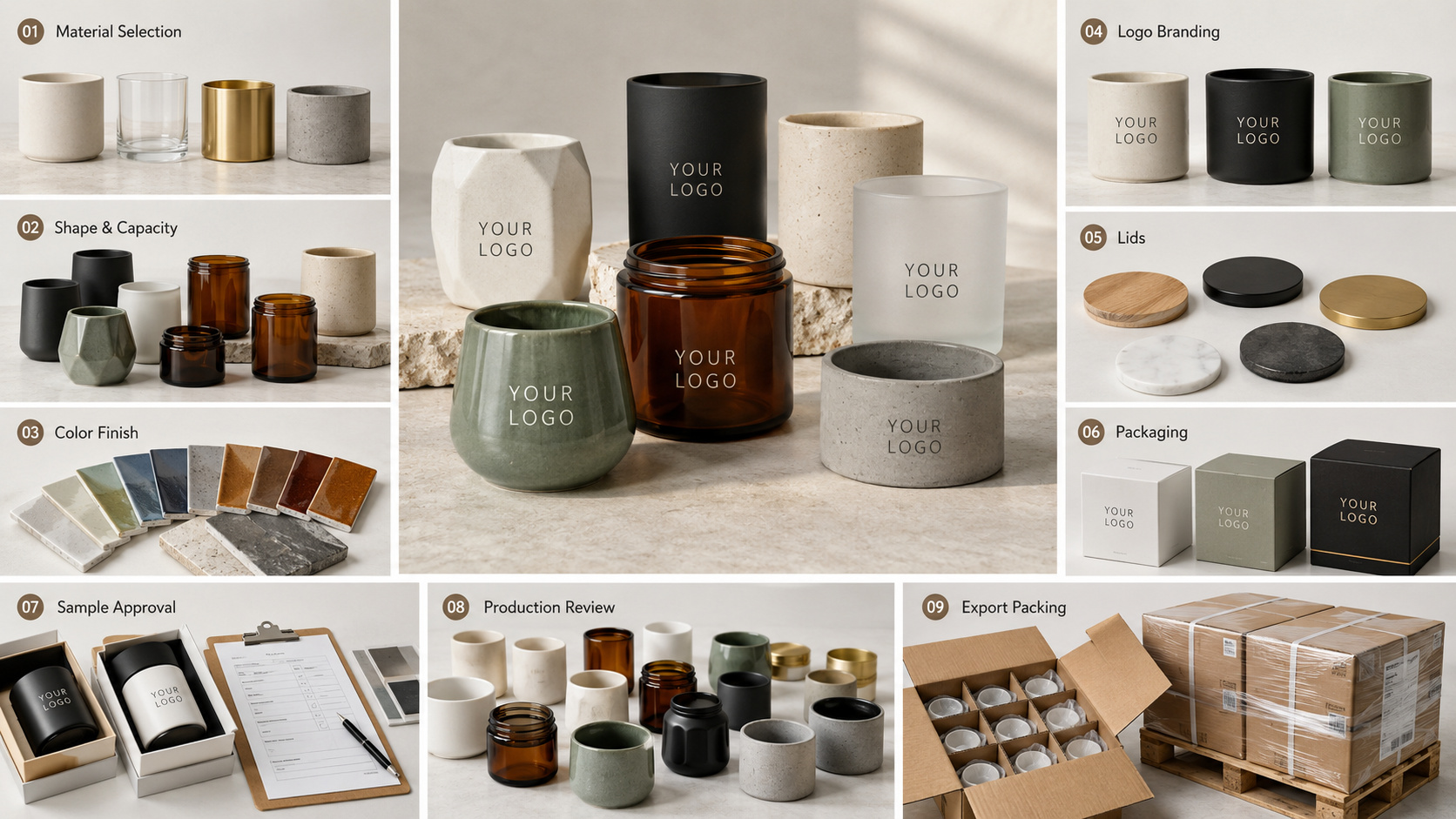
Vessaro supports candle brands, importers, wholesalers, distributors, candle manufacturers and private-label programs that need more than a standard container from a catalog. A custom project normally starts by defining the vessel material, target size or capacity, shape, finish, branding, lid, packaging and order quantity before sampling begins.
Our main in-house manufacturing category is ceramic candle vessels, produced at our Chaozhou production base. Glass candle jars, candle tins and cement containers are supplied through approved partner factories and managed against confirmed specifications, approved samples and final inspection requirements.
This distinction is important when developing an OEM order. Ceramic projects can involve direct review of forming, glaze, firing and decoration requirements, while partner-supplied materials are developed around available models, partner production capability and Vessaro’s specification and approval process.
Buyers that are still comparing materials can first review our Material & Vessel Selection options before confirming the most suitable development route.
Material, Size, Shape and Capacity
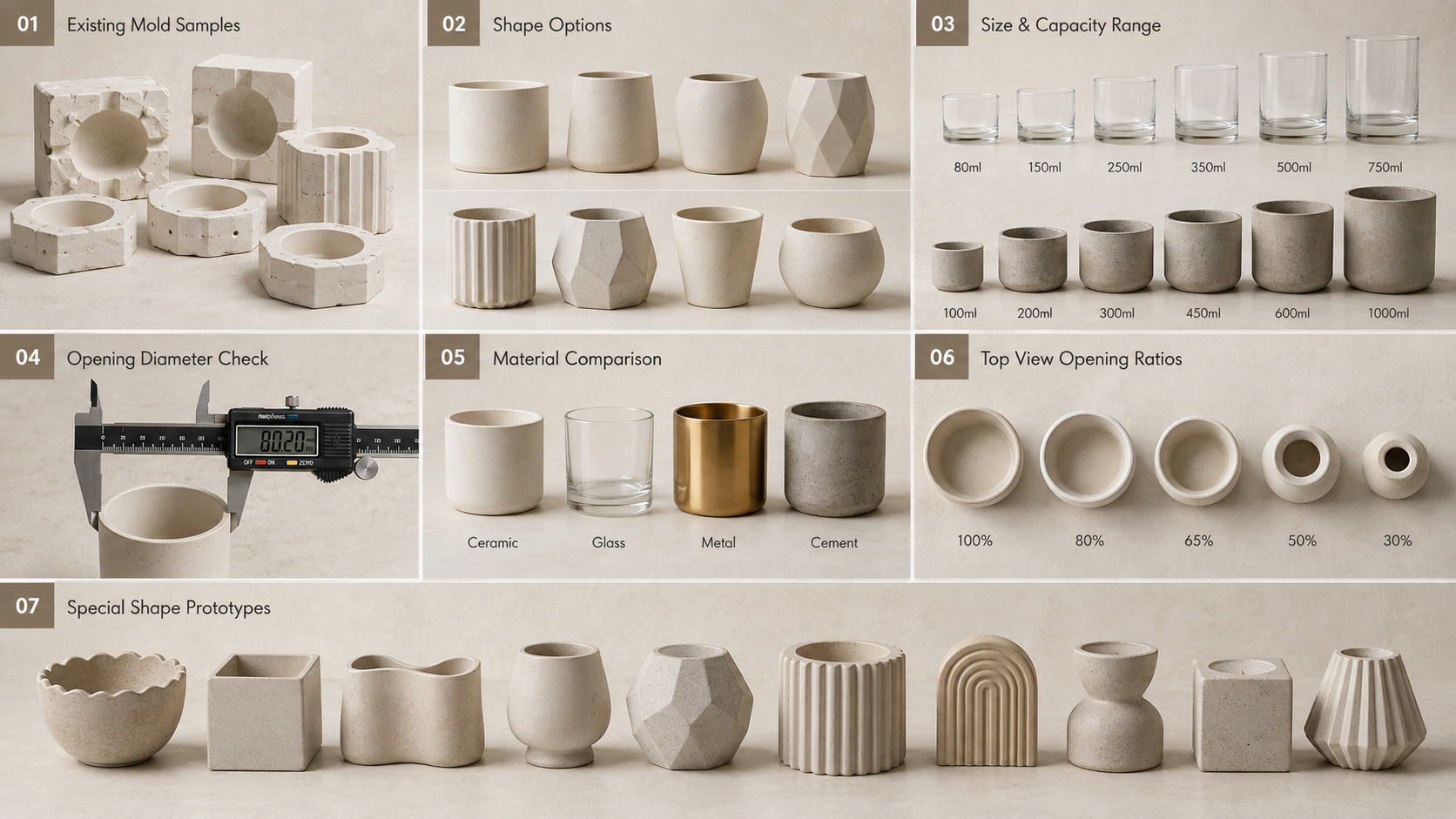
Material selection affects appearance, weight, production method, MOQ, decoration options, packaging protection and lead time. Ceramic, glass, metal and cement containers each require a different production and inspection approach, so material should normally be confirmed before detailed customization begins.
For ceramic vessels, buyers can select an existing mold or submit target dimensions, drawings or a reference sample for feasibility review. Existing molds normally make sampling more straightforward, while a new vessel shape may require mold development before a production-representative sample can be approved.
Capacity alone is not enough for development. We normally review overall height, diameter, opening size, wall profile, base shape and lid compatibility together. More detailed guidance is available on our Size, Shape & Capacity page.
Color, Glaze and Surface Finish Development
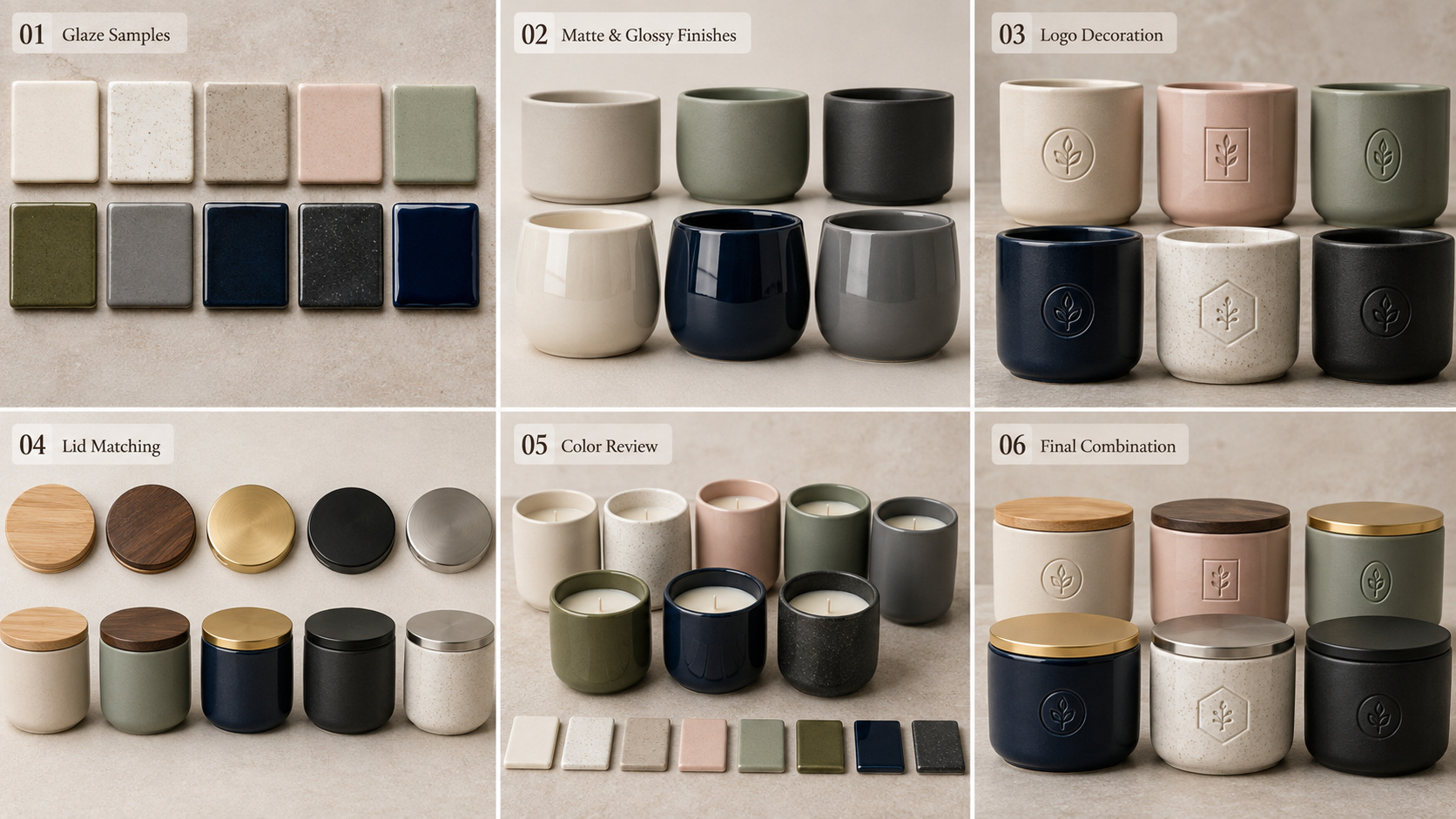
Color and surface appearance are major approval points for candle container programs, especially for ceramic vessels. Buyers may provide a target color, physical reference, artwork or an existing sample for development review.
Depending on the selected vessel, customization may involve ceramic glaze, spray color, matte or glossy appearance and other supported surface finishes. The correct process depends on material and the selected model, so finishes are reviewed before quotation and sampling rather than treated as interchangeable options.
For ceramic projects, the approved physical sample becomes an important bulk-production reference for glaze color, surface appearance and other agreed details. Because ceramic firing can influence the final appearance, the objective is controlled production against the approved reference rather than an unrealistic promise that every fired piece will be visually identical.
More detail about these options is available on our Color, Glaze & Surface Finish page.
Logo, Lids and Brand Details
Branding should be confirmed together with the vessel rather than added at the end of the project. We review logo artwork, required size, position, vessel surface, decoration feasibility and the selected finish before preparing a sample.
Matching lids and selected accessories are also checked against vessel dimensions. Lid fit, opening size and the intended visual combination should be confirmed before bulk production, particularly when components come from different production sources.
Supported logo methods depend on the container material and finish. We therefore recommend sending the actual artwork or a clear branding reference when requesting a quotation. Detailed project considerations are covered on our Logo & Branding page.
Private-Label Packaging and Export Protection
Packaging development includes both brand presentation and transport protection. Depending on the project, private-label options may include inner boxes, custom color boxes, labels, barcodes, protective dividers, export cartons and pallet packing.
Packaging should be reviewed early because vessel material, dimensions, weight and shipping method can affect carton size, divider design and packing quantity. Fragile ceramic and glass containers typically require different protection from metal tins, while heavier cement vessels may require additional attention to carton strength and handling.
For branded retail or distribution programs, packaging artwork should be confirmed before final production scheduling so printed boxes, labels and vessel production can be coordinated together.
Sample Approval Before Bulk Production
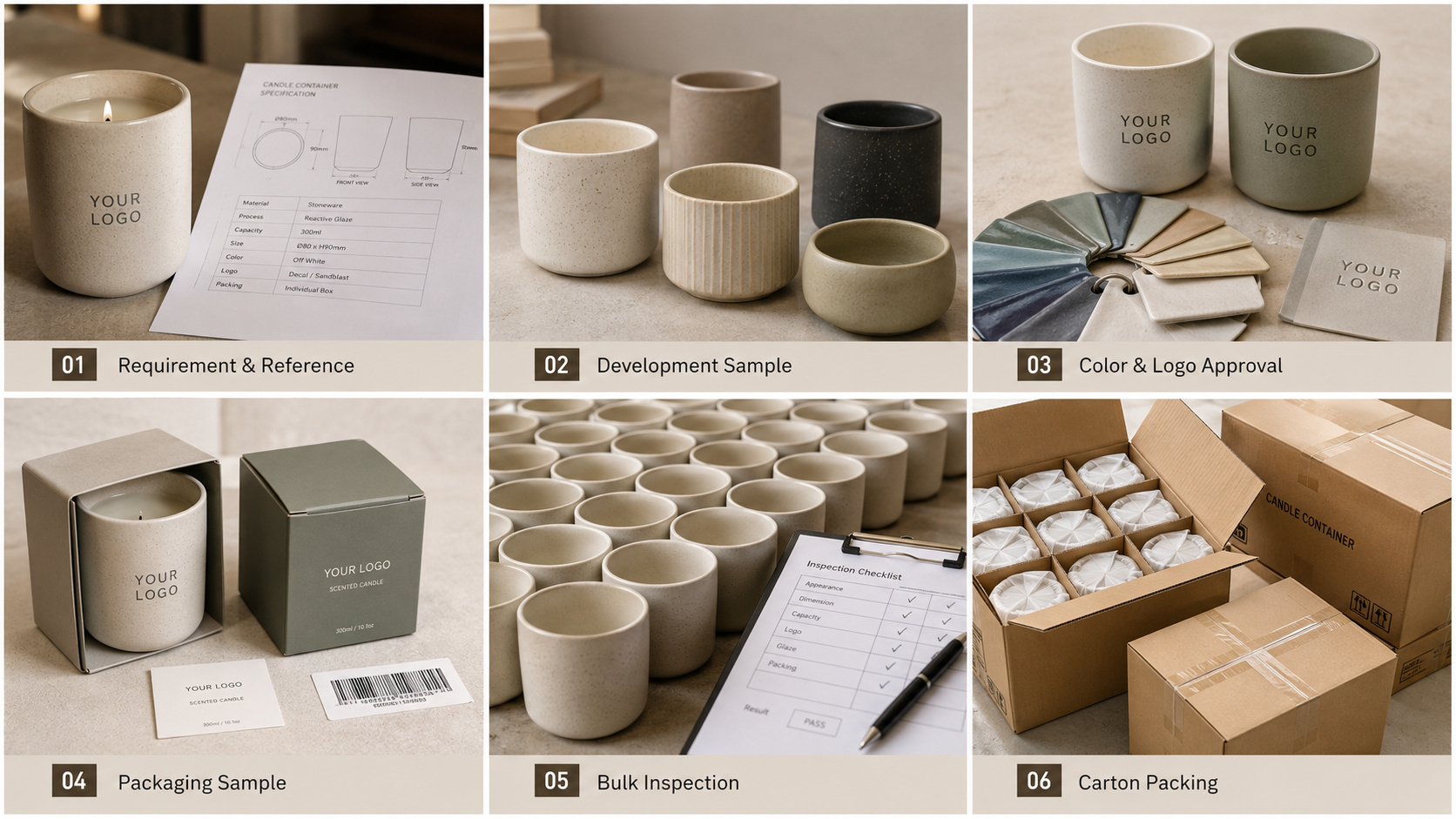
Sampling is the main control point between a custom concept and a repeatable bulk order. Standard and customized samples normally require about 7–15 days, depending on vessel material, finish, logo and packaging requirements. New mold projects generally require around 20–30 days before a reference sample can be approved.
During sample review, buyers should confirm the points that will later be used for bulk inspection, including dimensions, color or glaze, surface finish, logo position, lid fit and packaging details.
If changes are required, they should be confirmed before mass production begins. Once the sample and specification are approved, bulk production normally requires about 30–45 days, depending on material, quantity, decoration, finishing and packaging.
MOQ, Quotation and Project Information
Typical project MOQ is around 500–3,000 pieces per design, depending on material, finish, decoration and packaging. New molds, special finishes or specific partner-factory requirements may require a higher quantity.
For an accurate quotation, please provide as much of the following information as possible:
- Container material or reference product
- Target capacity and dimensions
- Quantity per design
- Preferred shape or existing mold reference
- Color, glaze or surface finish
- Logo artwork and required position
- Lid or accessory requirements
- Private-label packaging requirements
- Destination country and target delivery timing
A clear RFQ allows us to identify whether the project should use an existing vessel, a modified specification or new mold development, and to confirm the applicable MOQ, sample plan, production lead time and packing method before the order moves forward.