
Different Materials Require Different Production Routes
Vessaro manages candle container production according to the material and confirmed order specification rather than treating ceramic, glass, metal and cement vessels as one manufacturing process.
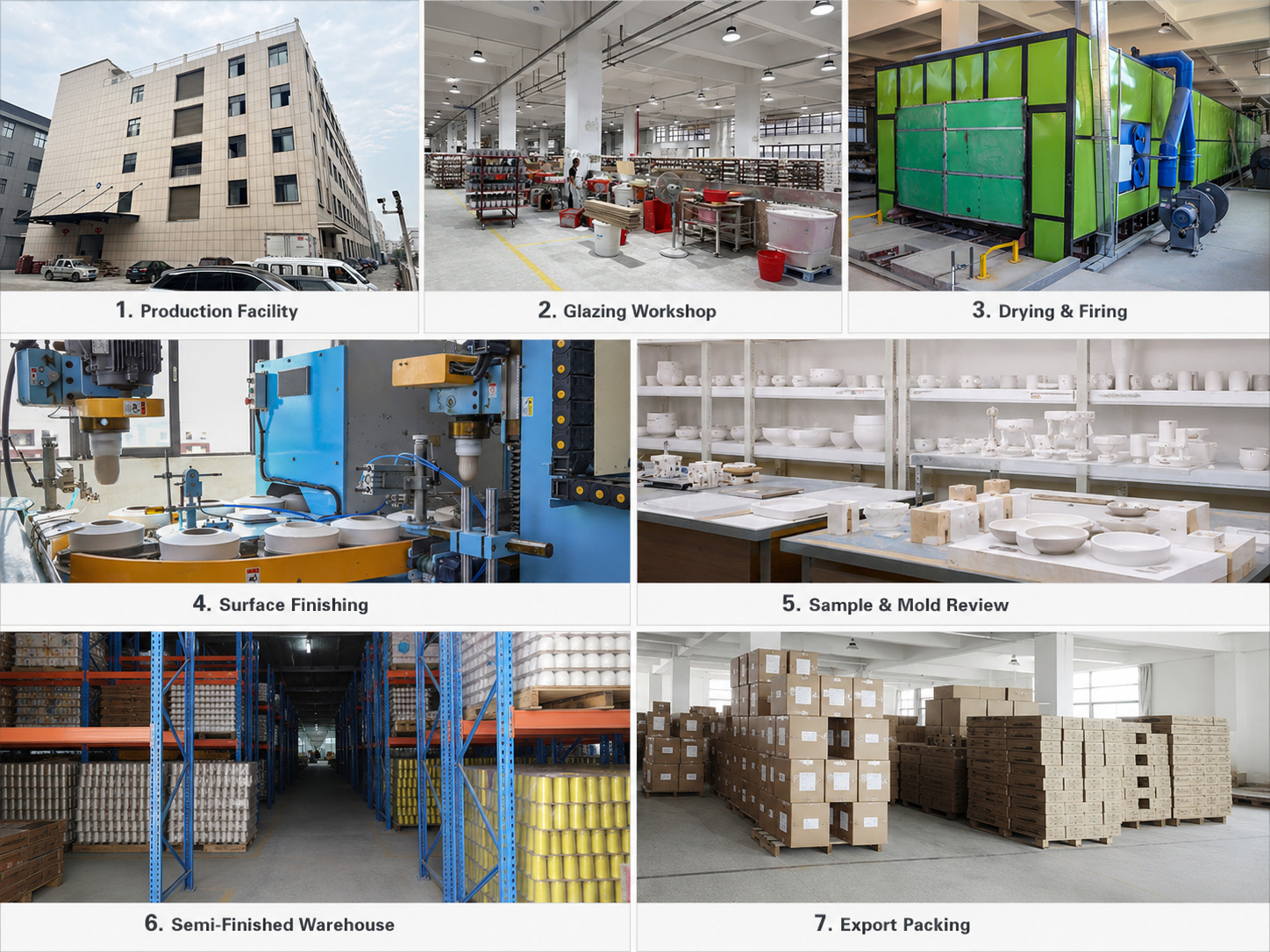
Our main in-house manufacturing category is ceramic candle vessels, produced at our Chaozhou, Guangdong production base. The ceramic workflow covers body preparation, forming, drying, glazing, firing, supported decoration, inspection and packing.
Glass candle jars, candle tins and cement containers are produced through approved partner factories. For these programs, Vessaro focuses on model and specification confirmation, sample approval, production coordination and final inspection before shipment.
This separation allows buyers to understand exactly which products are manufactured directly by Vessaro and which are managed through our multi-material supply network.
Ceramic Body Preparation and Forming
Ceramic production starts with body preparation and the forming method required by the selected vessel structure. Existing molds can normally move more directly into production, while a new shape requires mold feasibility and sample development before bulk manufacturing.
The body condition, vessel profile and wall structure all influence the later drying and firing result. More information about the first production stage is available on our Raw Material & Body Preparation page.
After forming, greenware is dried and checked before glazing. Visible cracking, deformation or forming defects should be identified before more finishing work is added. Buyers can review this stage in more detail through Forming & Drying.
Glazing, Firing and Decoration
Once the ceramic body is ready, the approved finish is applied according to the project specification. Depending on the selected design, production may include glaze application, spray finishing, kiln firing, polishing and supported decoration processes.
The approved physical sample is used as the reference for glaze direction, surface appearance, logo position and other agreed details.
Ceramic firing can naturally create reasonable variation between pieces, especially in glaze tone and surface effect. Bulk production is therefore controlled against the approved sample and an acceptable production range rather than an unrealistic promise that every fired vessel will appear perfectly identical.
Partner-Supplied Glass, Tin and Cement Programs
Glass, tin and cement candle containers do not follow the Chaozhou ceramic production line.
For these materials, the selected model, dimensions, finish, logo, lid and packaging are confirmed before the partner factory begins bulk production. Samples are reviewed first so both the buyer and supplier have a clear reference for the order.
Vessaro then coordinates the production specification and checks the finished goods against the approved requirements before shipment release.
This route is particularly important for multi-material programs where a buyer may need ceramic vessels together with glass jars, candle tins or cement containers under one sourcing project.
Final Inspection Before Packing
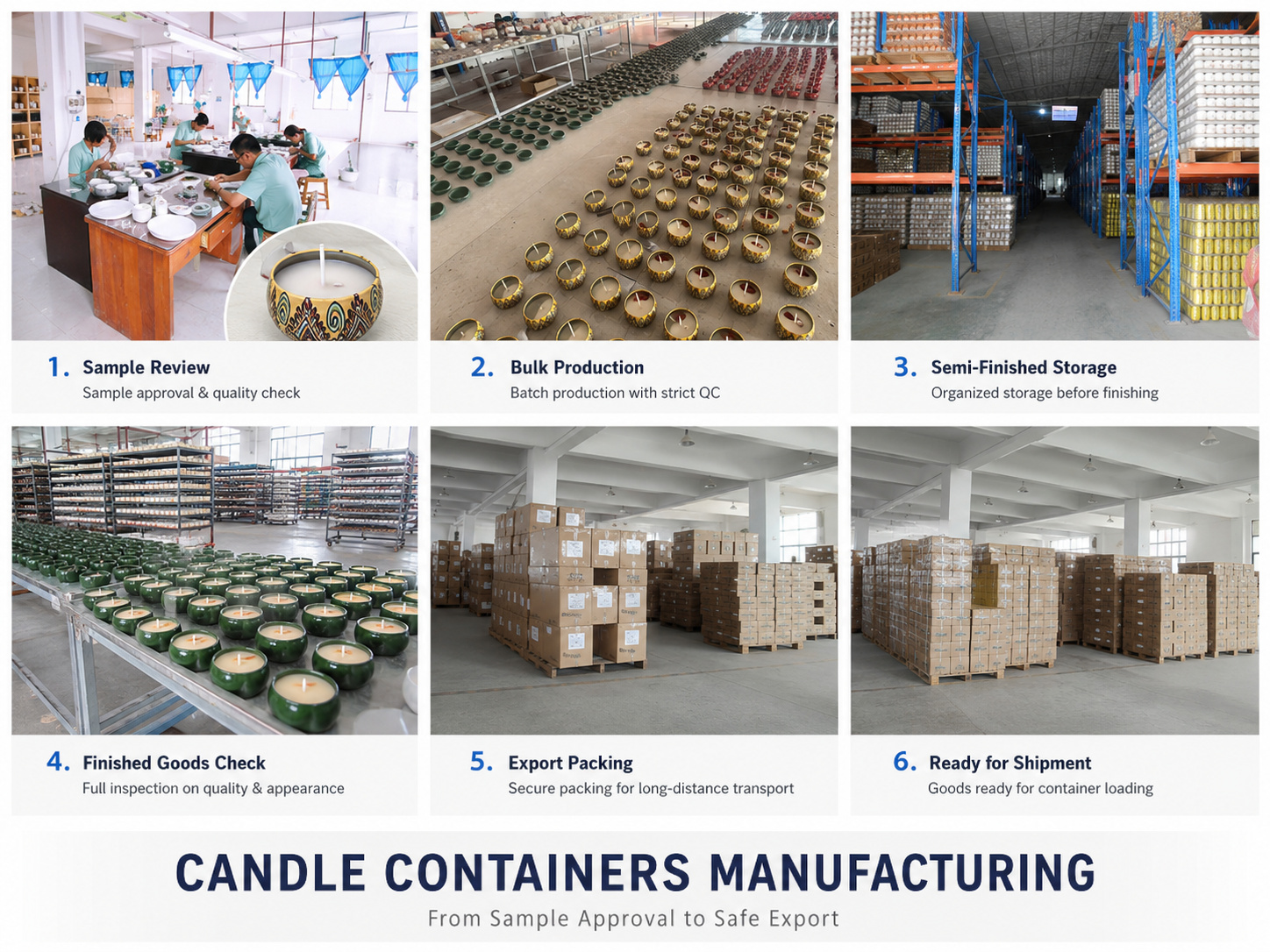
Bulk production is not considered complete until the order is checked against the confirmed specification.
Inspection may cover dimensions, appearance, glaze or surface finish, logo position, lid fit and packaging requirements. Detailed checks are outlined on our Dimensional & Final Inspection page.
Standard and customized samples normally require about 7–15 days, while new mold projects generally require around 20–30 days before approval. After sample approval, bulk production normally takes approximately 30–45 days, depending on material, quantity, finish, decoration and packaging.
Information Needed Before Production
To prepare the correct manufacturing route, buyers should provide the container material, target size or capacity, quantity per design, finish, logo requirements, lid, packaging and destination country.
These details allow us to confirm whether the order can use an existing model or mold, whether new development is required, and which production, sampling and inspection route should be used before bulk manufacturing begins.