
Forming Turns the Approved Design Into a Production Body
Forming is the stage where the confirmed vessel dimensions, shape and mold are translated into the actual ceramic body. The forming method must suit the vessel profile, opening, wall structure and production quantity because these details influence dimensional stability and the later drying and firing result.
At Vessaro’s Chaozhou production base, ceramic candle vessels are formed as part of our in-house production workflow. Depending on the selected design, suitable forming methods can include slip casting where applicable. Existing molds normally follow an established route, while new vessel shapes require mold and sample confirmation before bulk forming begins.
Before this stage, the ceramic body and mold should already be prepared. Buyers can review the preceding process on our Raw Material & Body Preparation page.
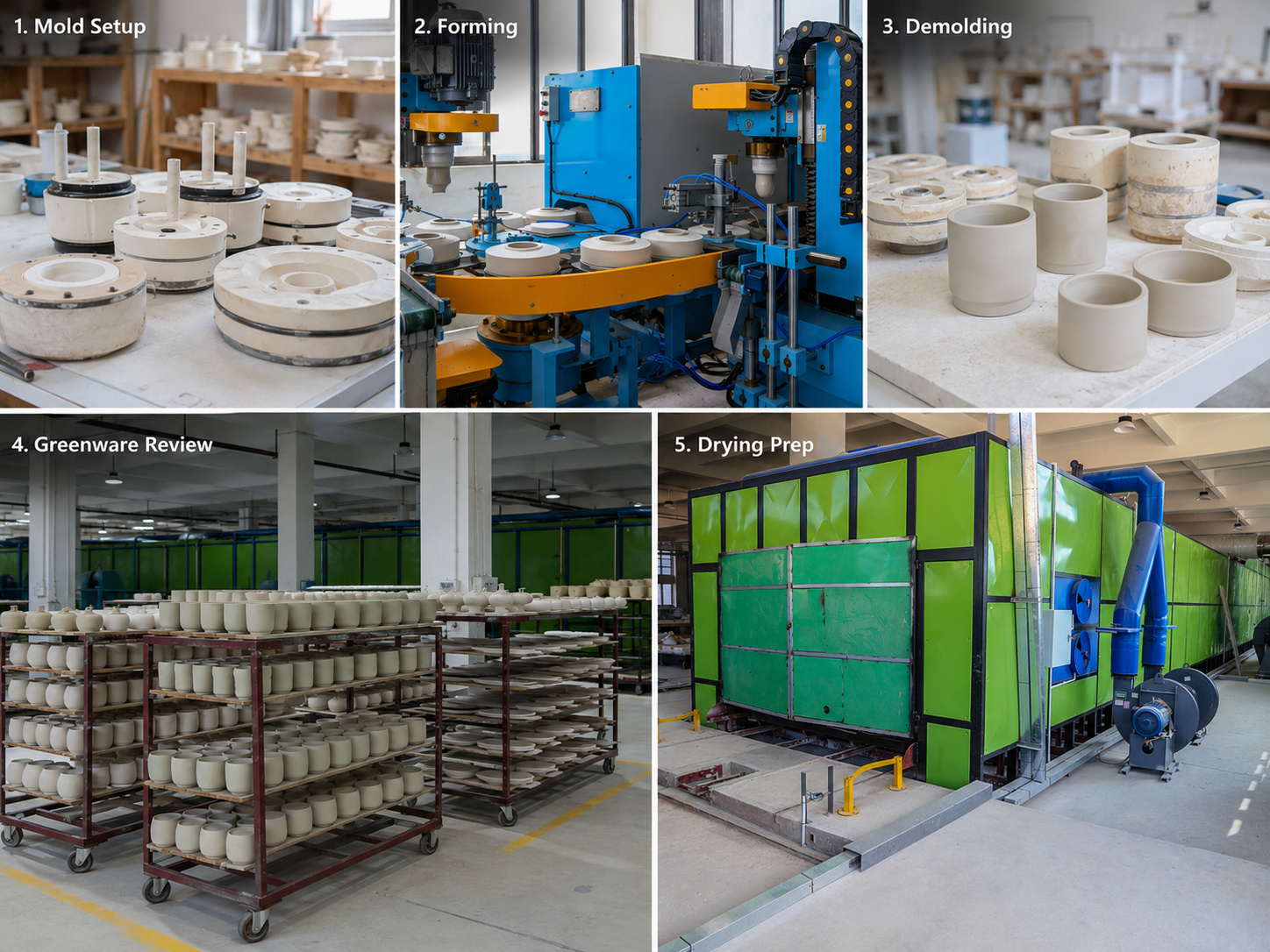
Mold Setup and Vessel Shape Control
The mold determines more than the outside appearance of the vessel. It also affects the opening profile, body diameter, height and other dimensions that must remain within the approved project specification.
Straight cylindrical vessels are generally more straightforward than highly curved or special profiles, but every design still needs to be reviewed according to its actual structure.
During production setup, the team works from the approved mold and sample reference. If a new mold has been developed, the first production samples should be checked before larger quantities move forward.
This is especially important when the vessel must later match a specific lid or branded packaging.
Greenware Handling After Forming
Freshly formed ceramic bodies are commonly referred to as greenware before firing. At this stage, the vessels have not yet reached their final strength and require appropriate handling before glazing.
Greenware can be reviewed for visible forming issues such as:
- Distortion or uneven body shape
- Cracking
- Rim irregularities
- Obvious surface defects
- Differences from the approved profile
Finding these issues before glazing prevents unnecessary finishing work from being added to unsuitable pieces.
Controlled Drying Before Glazing
Drying is not simply waiting for the vessel to become dry. Moisture needs to leave the ceramic body before it proceeds to later production stages.
Vessel size, wall structure and shape can influence drying behavior. Larger or more complex bodies may require different handling from smaller, simpler forms.
The objective is to move suitable greenware into glazing without excessive deformation or cracking. Once drying is complete, the vessel condition can be reviewed before surface finishing begins.
The next production stage is explained on our Glazing & Surface Finishing page.
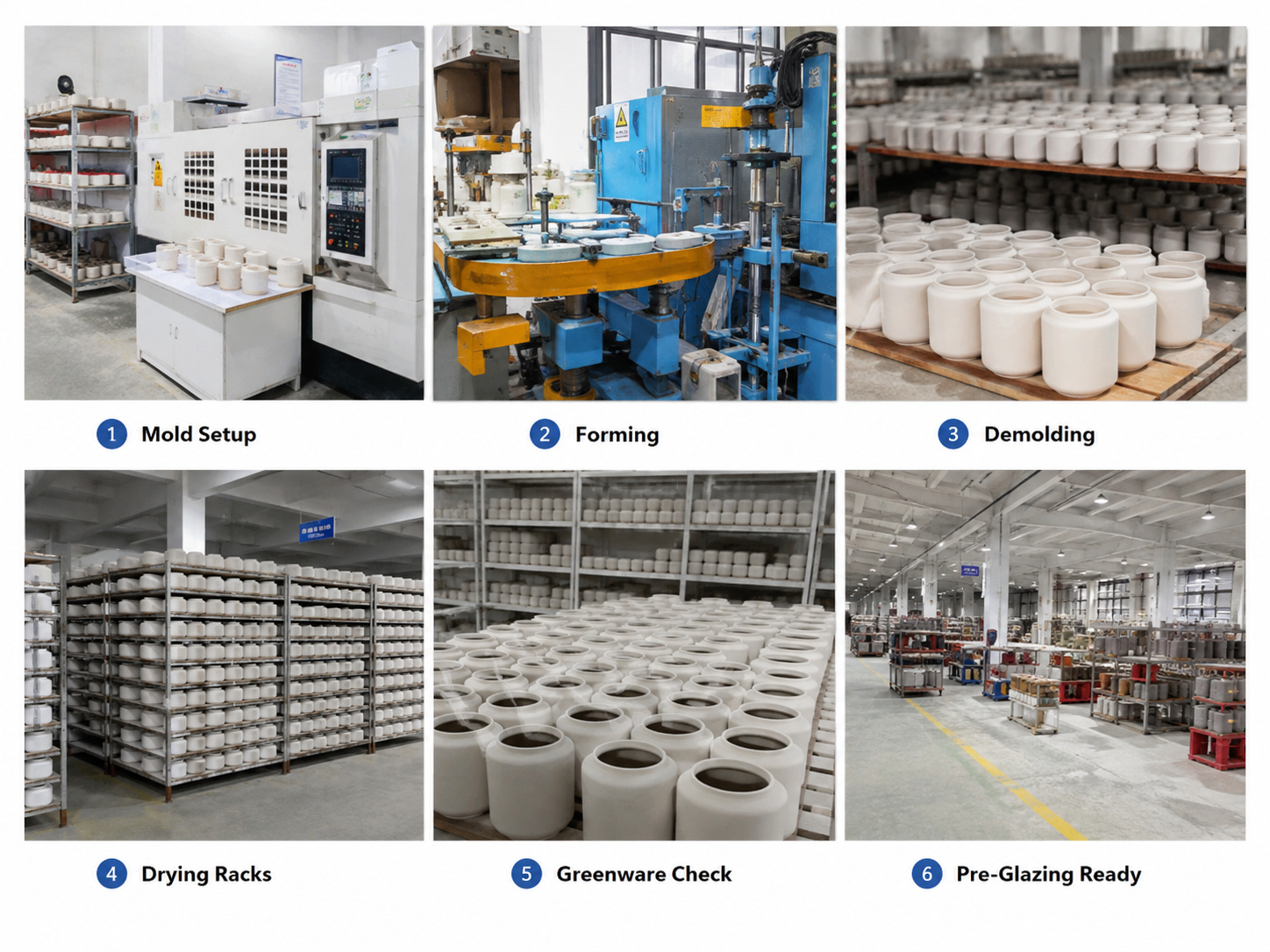 Sample Approval and Bulk Production Control
For OEM projects, the forming and drying result should follow the approved vessel specification before bulk finishing continues.
Standard and customized samples normally require about 7–15 days. New mold projects generally require around 20–30 days before an approval sample is available.
Typical project MOQ is approximately 500–3,000 pieces per design, depending on vessel shape, finish, decoration and packaging. More complex new-mold projects may require higher quantities.
After the sample is approved, complete bulk production normally takes around 30–45 days, including the later glazing, firing, decoration, inspection and packing stages.