
Start with the Dimensions That Affect the Whole Project
Size and shape influence more than the appearance of a candle container. They also affect usable capacity, opening diameter, wall profile, lid compatibility, packing quantity, carton size, product weight and the feasibility of using an existing mold.
For a new project, we normally ask buyers to provide the target capacity together with approximate height, diameter, opening size and preferred vessel profile. A reference product, drawing or dimensioned sketch is helpful when the requirement is more specific.
Ceramic candle vessels are our main in-house manufacturing category in Chaozhou. Glass, tin and cement containers are selected and developed through approved partner factories, so available dimensions and modification options depend on the chosen material and model.
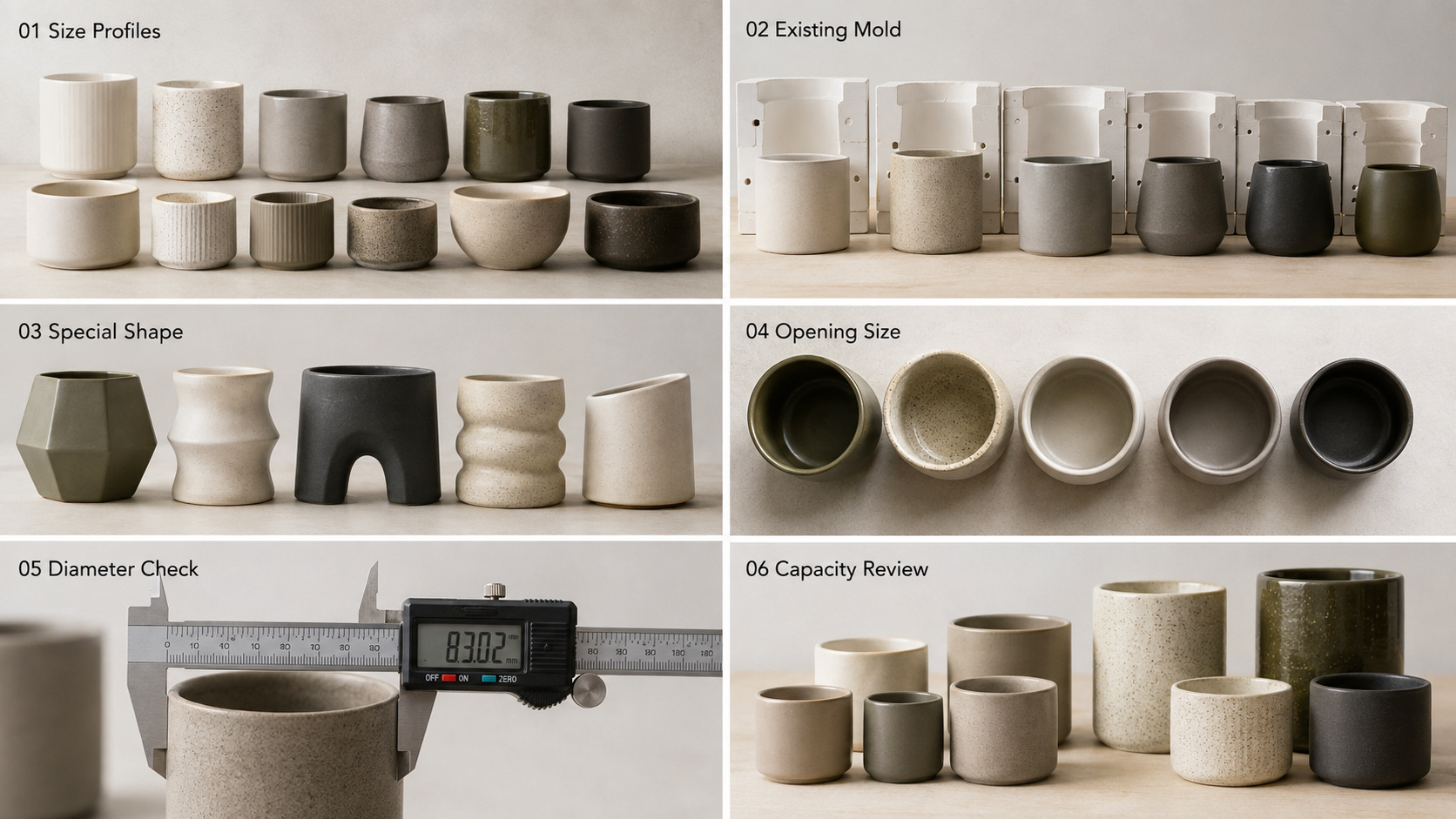
Existing Mold or New Vessel Shape
Using an existing mold is usually the more straightforward route when the target size and shape are close to an available design. Buyers can then focus on glaze, color, logo, lid and packaging without adding a new tooling stage.
When a specific profile is required, we can review target dimensions, drawings or a physical reference sample for new-mold feasibility. Ceramic projects may include straight cylinders, rounded bodies, wide-mouth vessels, tapered profiles or other shapes that can be evaluated for production.
A new mold affects development cost, MOQ and sample timing, so feasibility should be confirmed before artwork and packaging are finalized. Buyers considering a new shape can also review our Material & Vessel Selection page before selecting the development route.
Capacity Must Be Confirmed with Physical Dimensions
A stated capacity such as 200 ml, 300 ml or 400 ml does not define the complete vessel specification. Two containers with similar volume can have very different height-to-diameter ratios and opening sizes.
During development, we therefore review:
- Overall height and body diameter
- Opening diameter
- Internal capacity
- Wall and base profile
- Straight, rounded or tapered body shape
- Lid compatibility
- Expected packing configuration
These dimensions should be confirmed together rather than adjusted independently. A larger opening may change the vessel profile, while a taller or wider design may affect carton quantity and shipping volume.
Opening Size and Lid Compatibility
The vessel opening is an important purchasing detail when a lid will be used. A lid selected only by appearance may not fit correctly if the opening diameter, rim profile or tolerance differs from the approved sample.
For projects requiring wood, bamboo, metal or other supported lid options, the vessel and lid should be reviewed as one specification. More detailed lid considerations are covered on our Lids & Accessories page.
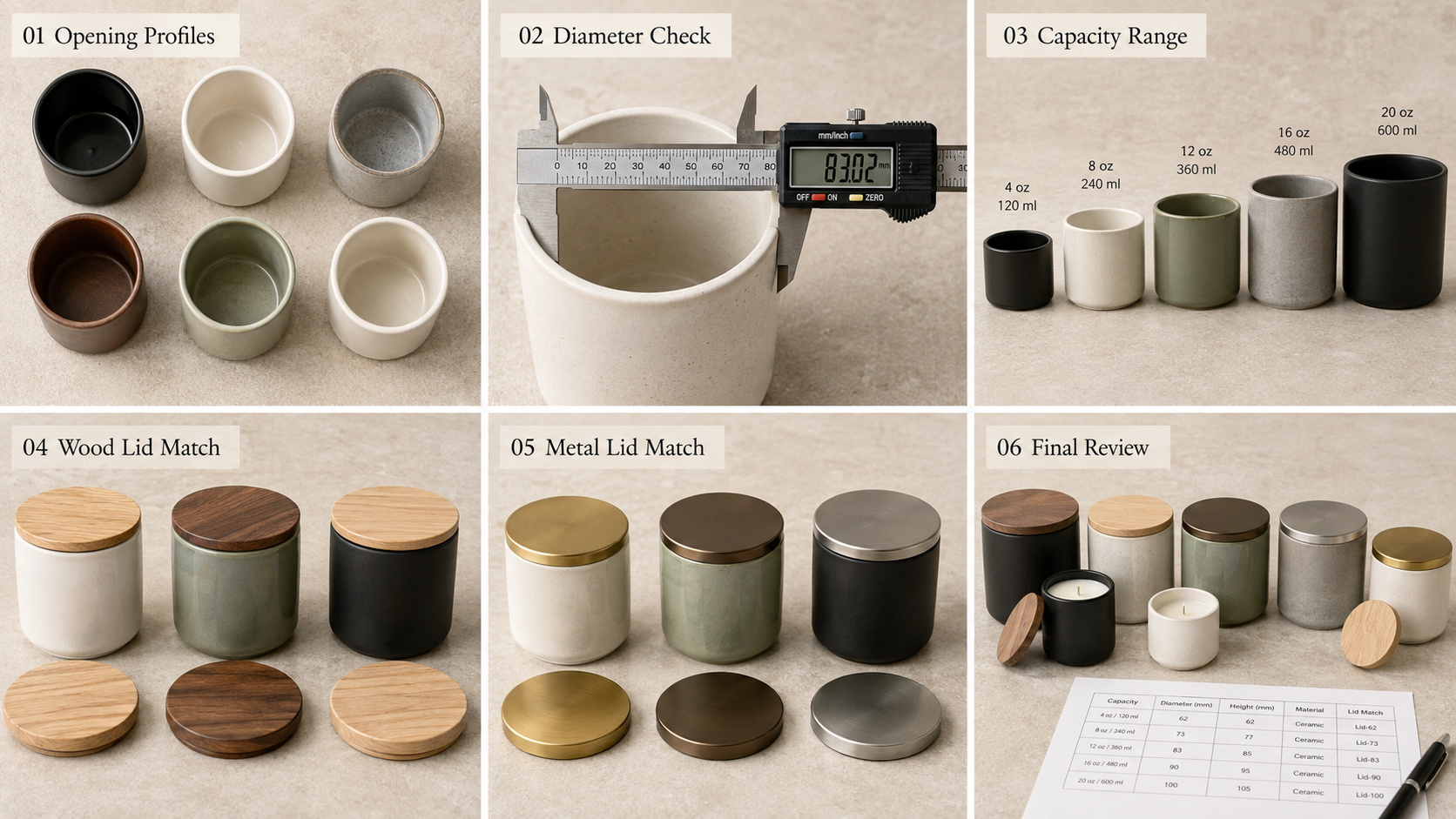
Sample Approval Before Bulk Production
The development sample is used to confirm the dimensions, shape, capacity, opening and other agreed details before mass production.
Standard and customized samples normally require about 7–15 days. Projects requiring a new mold generally take around 20–30 days before an approval sample is available. Typical MOQ is approximately 500–3,000 pieces per design, while new molds or special specifications may require higher quantities.
After sample approval, bulk production normally requires around 30–45 days, depending on material, quantity, finishing and packaging requirements.
Information Needed for Size and Shape Development
For a more accurate project review, please provide the target capacity, height, diameter, opening size, order quantity and any available drawing or reference sample.
If the vessel will also require a specific glaze, color or surface appearance, those details can be developed after the main dimensions are confirmed through our Color, Glaze & Surface Finish options.