
Develop the Surface After the Vessel Is Confirmed
Color and surface finish are major approval points in a candle container project because they directly affect the final appearance of a collection. For ceramic vessels, the selected glaze and firing result can also influence color depth, gloss level, texture and visible variation between pieces.
Vessaro develops ceramic candle vessels at our Chaozhou production base, where glazing, firing, supported finishing and inspection are part of the in-house production route. Glass, tin and cement surface options are coordinated through approved partner factories according to the selected model and confirmed sample.
Before color development begins, buyers should normally confirm the basic vessel dimensions and profile through Size, Shape & Capacity so that the finish is evaluated on the correct container.
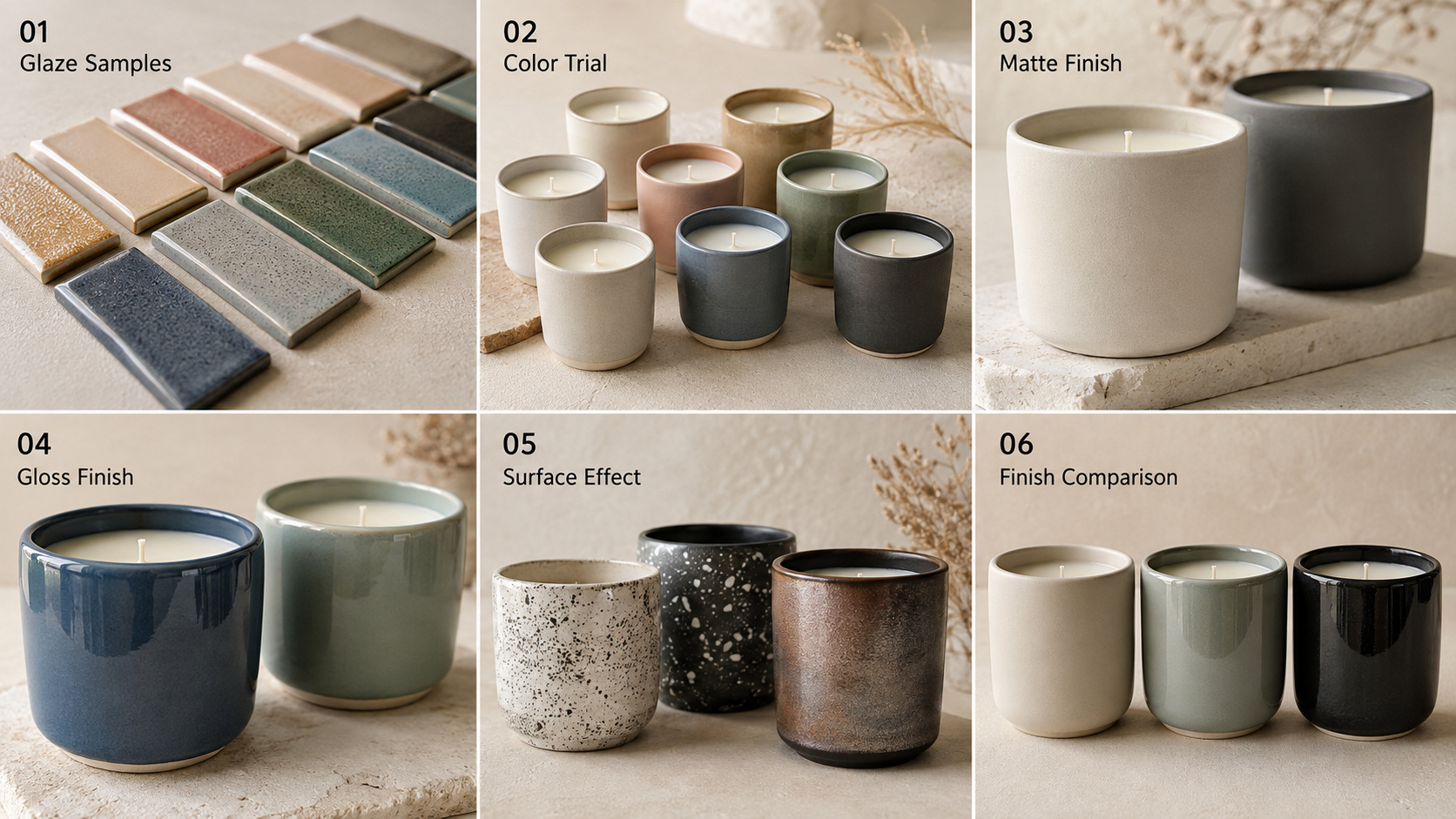
Ceramic Glaze and Color Development
For ceramic candle vessels, buyers may provide a target color, physical reference, existing product sample or other agreed visual reference. The development sample is then used to evaluate whether the glaze direction is suitable for the selected ceramic body and vessel shape.
Depending on the project, finishes may include matte, glossy, colored, speckled or other supported ceramic surface effects. Exact feasibility is reviewed by project rather than assuming that every color or finish can be applied to every vessel.
Glaze appearance is affected by the material, application and kiln firing process. More information about the production side of this stage is available on our Glazing & Surface Finishing page.
Matte, Glossy and Other Surface Effects
The same vessel shape can look very different when produced with a matte, high-gloss or textured surface. Finish selection should therefore consider both visual appearance and the intended branding method.
A smooth glossy surface may create stronger reflections, while matte and textured finishes provide a softer or more tactile appearance. Decoration feasibility can also vary according to the final surface.
If the project includes printed, embossed or other supported branding details, the finish and logo should be reviewed together. Buyers can continue to our Logo & Branding page for the next development stage.
Sample Approval and Color Reference
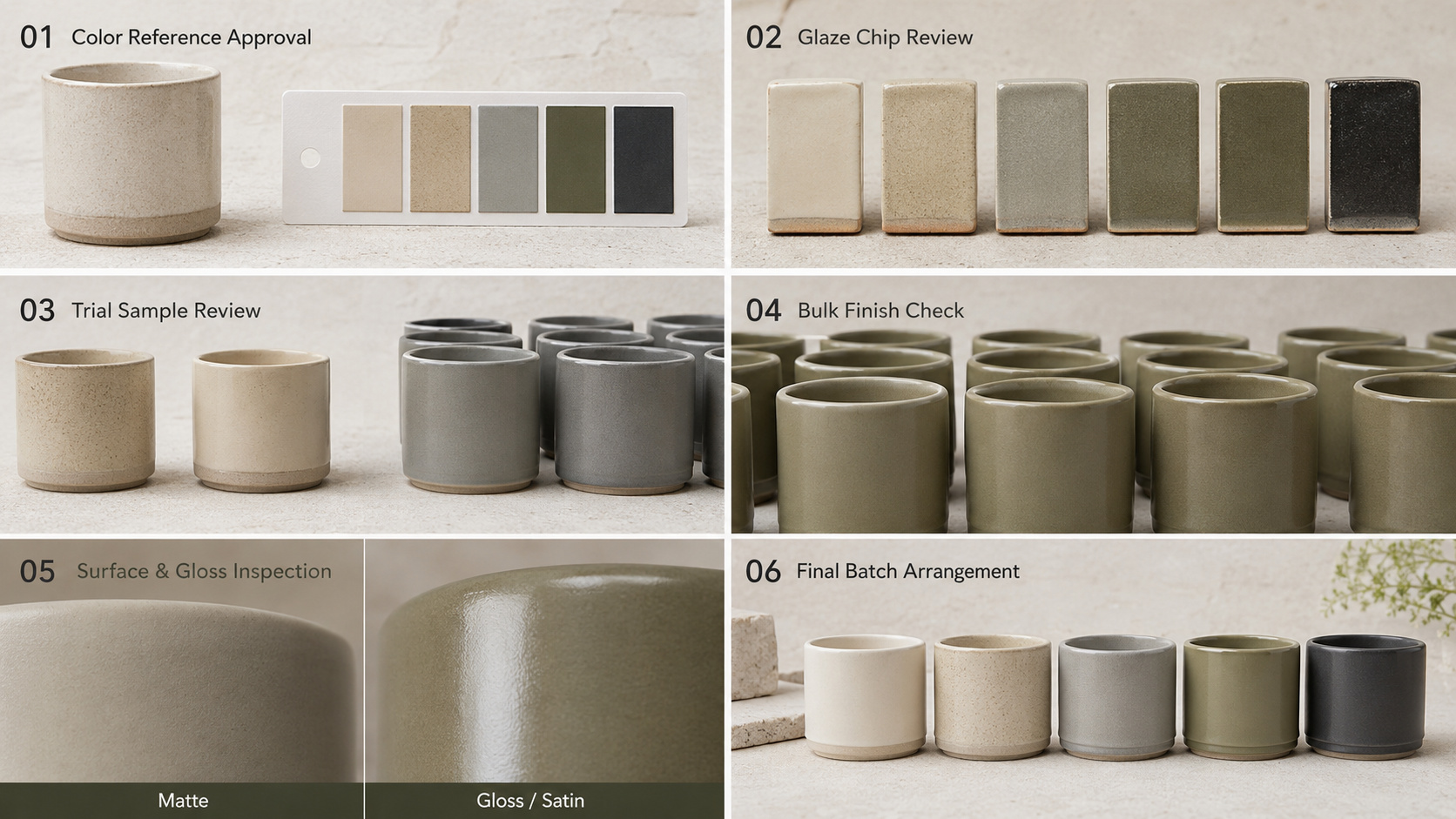
A physical sample is the main reference for confirming glaze color and surface appearance before bulk production.
Standard or customized samples normally take about 7–15 days. More complex development or new-mold projects may require additional time, with new mold samples generally taking around 20–30 days before approval.
During sample review, buyers should confirm:
- Overall color direction
- Matte or glossy level
- Surface texture and visible glaze effect
- Logo position and appearance where applicable
- Lid and vessel color combination
- Packaging presentation if the finish is sensitive to scratching
Ceramic firing can create reasonable variation between individual pieces, so bulk approval should be based on an agreed physical reference and acceptable production range rather than an unrealistic expectation of perfect visual identity.
MOQ, Production and Bulk Finish Control
Typical project MOQ is around 500–3,000 pieces per design, depending on vessel type, glaze, surface finish, decoration and packaging. Special finishes may require a higher quantity or additional development work.
After sample approval, bulk production normally takes approximately 30–45 days, depending on order quantity and finishing requirements.
During production and final inspection, agreed samples are used as the visual reference for color, glaze appearance, surface finish and other confirmed details. Projects combining vessel finish, logo, lid and packaging can be coordinated through our Custom / OEM process.