
In-House Ceramic Production and Multi-Material Supply
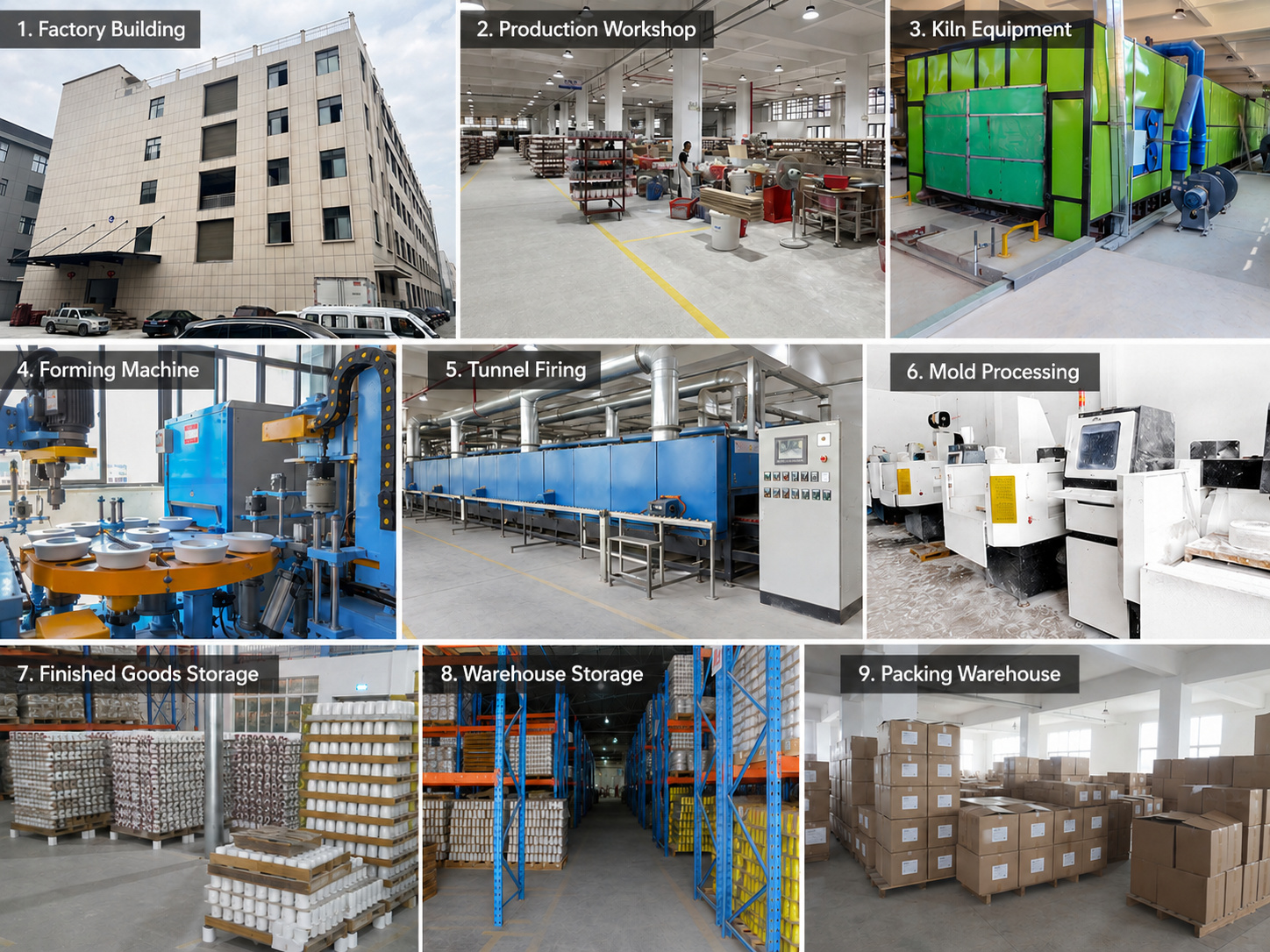
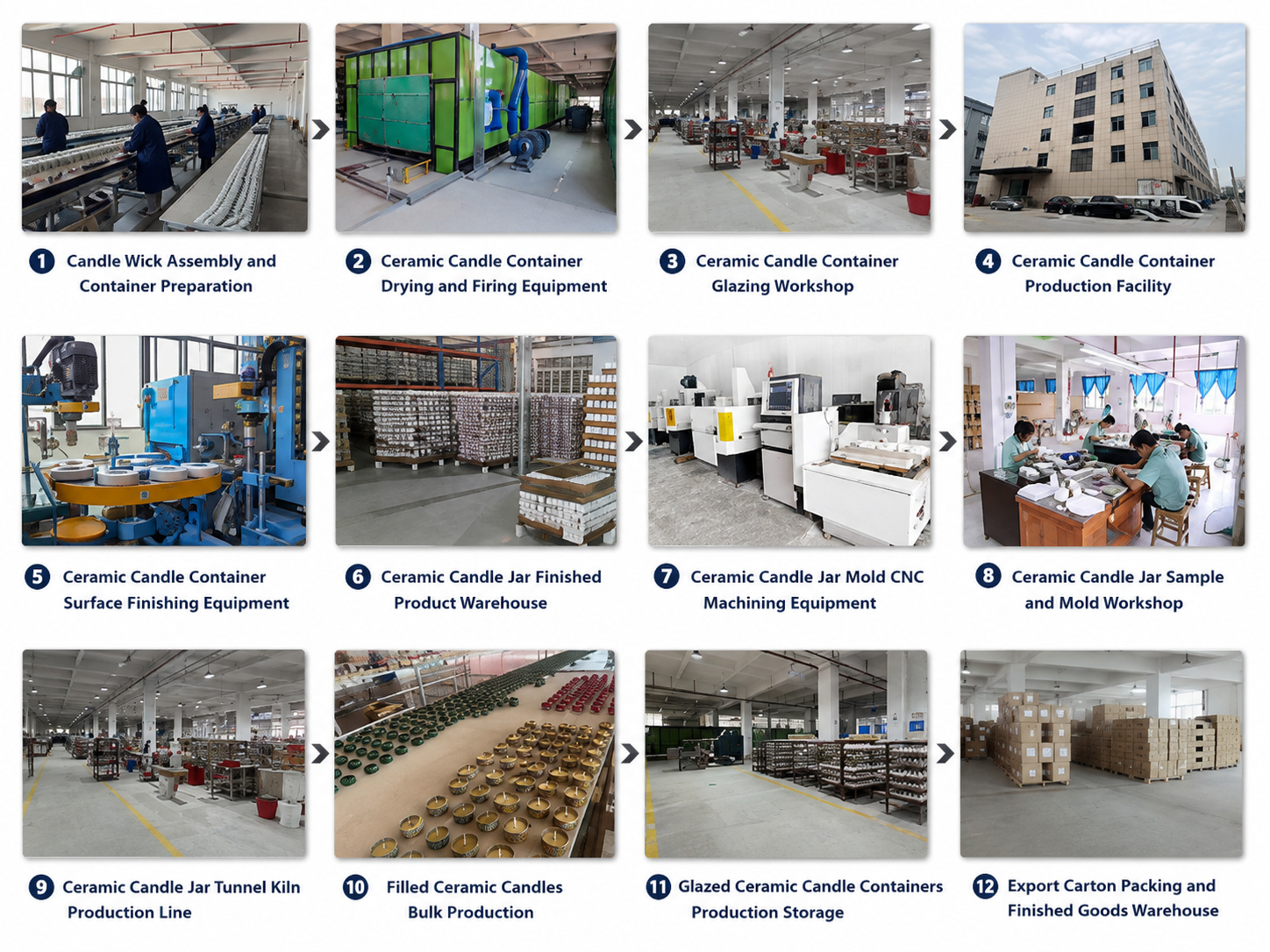
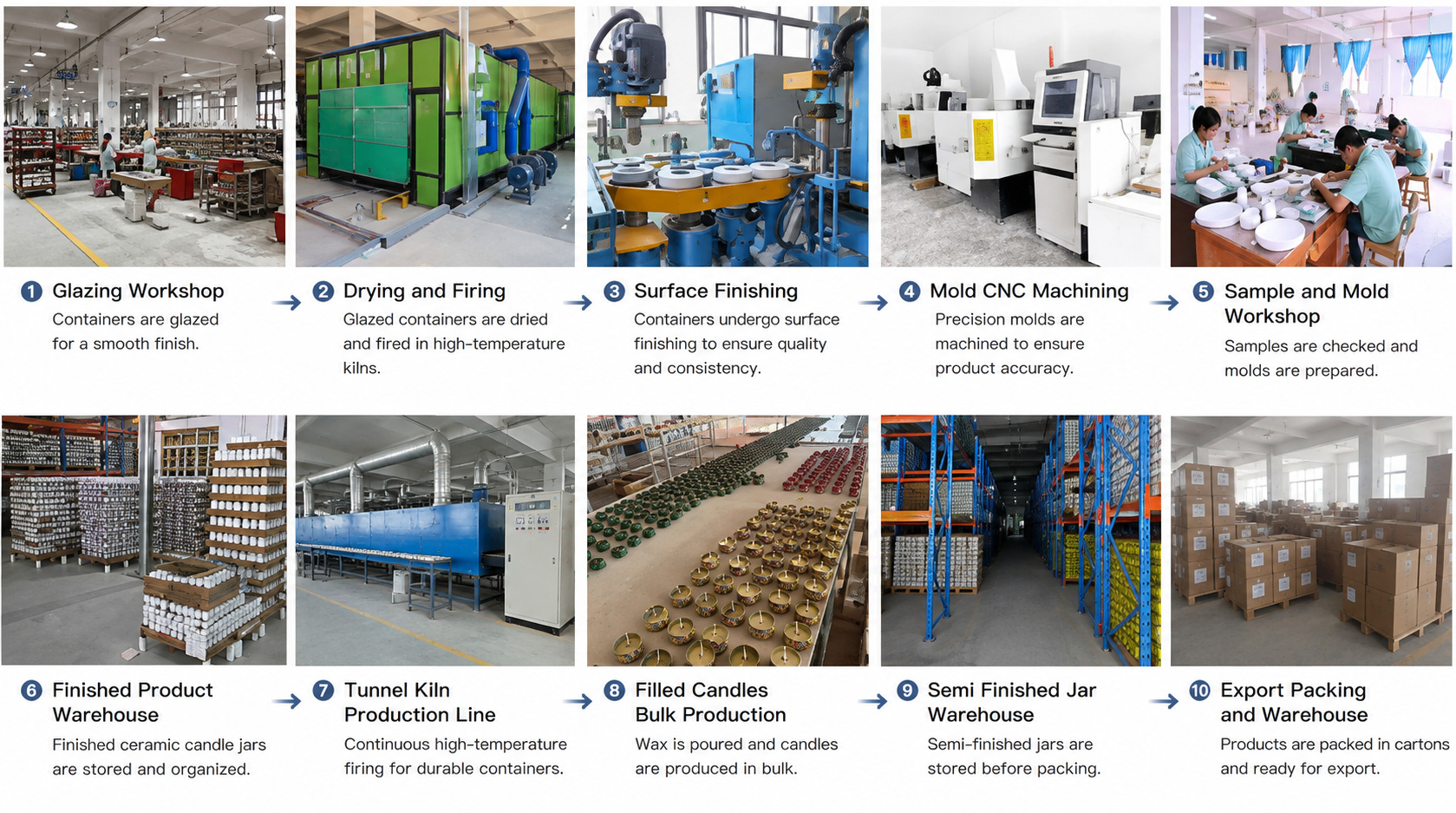
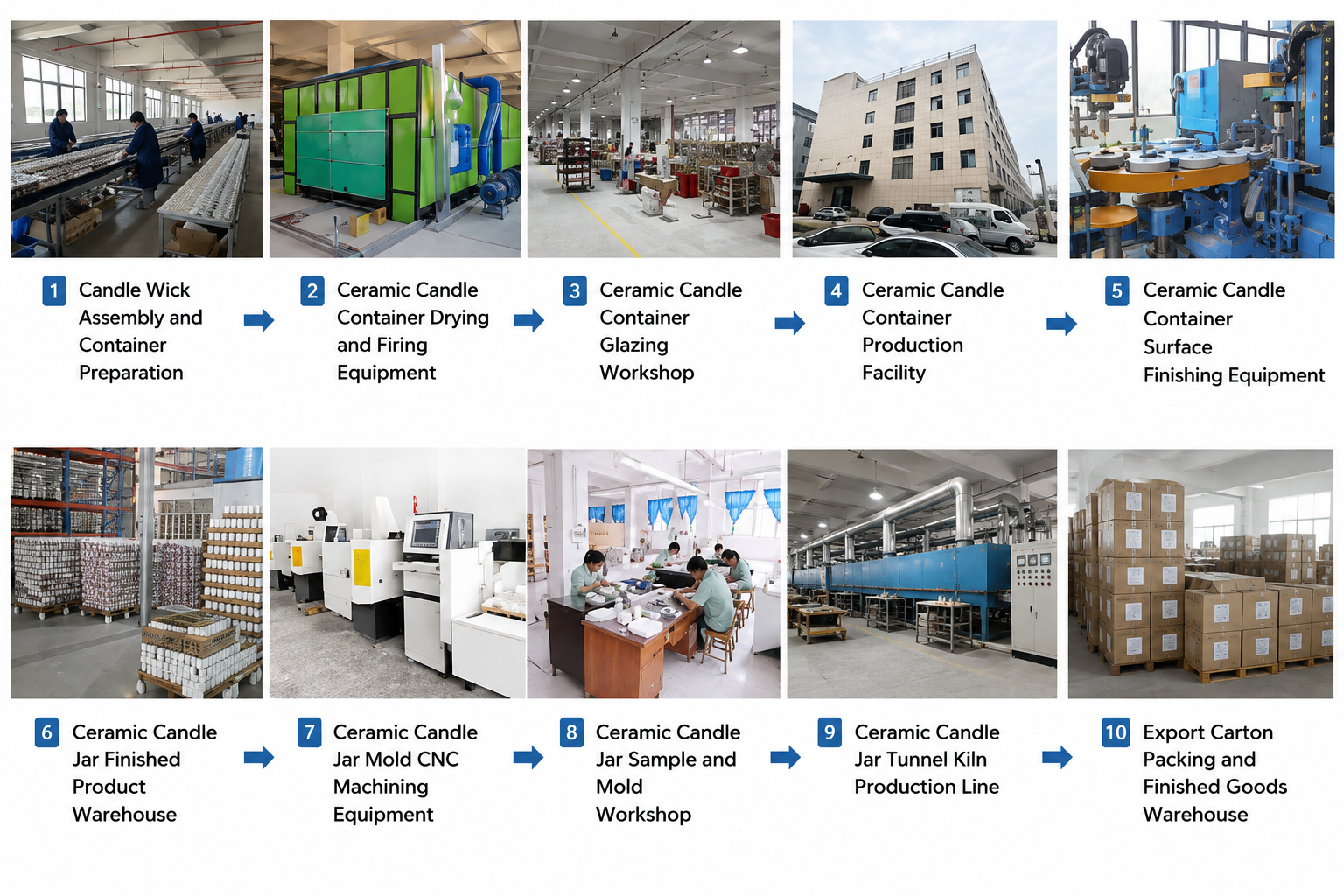
Vessaro’s main in-house manufacturing category is ceramic candle vessels. At our Chaozhou, Guangdong production base, ceramic orders move through material and body preparation, forming, drying, glazing, firing, supported decoration, inspection and packing before shipment.
The production base is approximately 10,700 m², with around 130–160 employees and approximately five production lines supporting ceramic vessel programs. Monthly ceramic output is typically around 280,000–380,000 vessels, depending on size, shape, glaze and finishing requirements.
Glass candle jars, candle tins and cement containers follow a different supply route. These products are coordinated through approved partner factories rather than represented as Vessaro’s own production lines. Specifications, samples and final inspection requirements are confirmed before bulk supply.
A more detailed overview of this production route is available on our Candle Containers Manufacturing page.
Material and Ceramic Body Preparation
Ceramic production begins before the visible vessel shape is formed. The ceramic body must be prepared for the selected forming method and product structure so the vessel can proceed through forming, drying and firing with suitable dimensional and surface control.
Material preparation can affect forming behavior, drying condition and the appearance of the finished ceramic body. Requirements also vary according to vessel size, wall profile and shape.
For OEM projects, the approved vessel specification is used as the production reference. Existing molds normally provide a more direct production route, while new shapes require mold feasibility and sample approval before bulk production.
More detail about this first stage is covered in Raw Material & Body Preparation.
Forming and Drying Before Glazing
The vessel shape is created using a production method suitable for the selected design, including slip casting where applicable. Straight cylindrical vessels, rounded bodies and more complex profiles can require different forming considerations.
After forming, greenware must be dried before glazing. This stage is important because excessive deformation, cracking or visible forming defects should be identified before additional finishing work is added.
Dimensions and shape are also reviewed against the agreed specification. For custom projects, changes to diameter, height, opening profile or wall structure should be resolved during development rather than after bulk production has started.
Buyers who want a closer look at this stage can review our Forming & Drying process.
Glazing, Firing and Surface Finishing
Glaze and firing have a direct effect on the visual result of ceramic candle vessels. Depending on the approved project, production may involve glaze application, spray finishing, kiln firing, polishing and supported decoration processes.
The physical approved sample provides the main reference for glaze color, surface appearance and agreed finish. Ceramic firing can create reasonable variation between pieces, so production control is based on an approved visual reference and acceptable batch consistency rather than an unrealistic promise of identical appearance on every fired vessel.
Finish selection should therefore be confirmed before mass production, especially when the vessel also requires a logo, matching lid or branded packaging.
Inspection, Packing and Bulk Order Release
Manufacturing is not complete when the vessel leaves the firing or finishing stage. Bulk orders still need to be checked against the approved specification before packing.
Inspection may cover dimensions, overall appearance, glaze or finish consistency, logo position, lid fit and packaging requirements. The specific inspection points depend on what was confirmed for the order.
Standard or customized samples generally take around 7–15 days, while new mold projects usually require around 20–30 days before an approval sample is available. After sample approval, bulk production normally takes approximately 30–45 days, depending on quantity, finish, decoration and packaging.
Detailed inspection requirements are covered on our Dimensional & Final Inspection page.
Production Information Needed Before a Bulk Order
A clear production specification helps reduce changes after sampling. Buyers should provide the vessel or reference design, dimensions or target capacity, quantity per design, glaze or finish, logo requirements, lid details, packaging requirements and destination country.
These details allow us to confirm whether the project follows an existing-mold production route or requires additional development, and to review the applicable MOQ, sample schedule, production lead time and packing method before bulk manufacturing begins.