
Glazing Defines the Visible Surface Before Firing
Glazing and surface finishing are critical stages in ceramic candle vessel manufacturing because they directly influence color, gloss level, texture and the overall appearance buyers see in the finished collection.
At Vessaro’s Chaozhou production base, dried ceramic bodies move into glazing only after the vessel shape and surface condition have been reviewed. Depending on the confirmed project, production may involve glaze application, spray finishing and other supported surface treatments before kiln firing.
The finish is not selected independently from the vessel. Ceramic body condition, shape, surface profile and the required visual effect all influence how the glazing route is prepared for production.
Buyers developing a specific appearance can review available project options through our Color, Glaze & Surface Finish page.
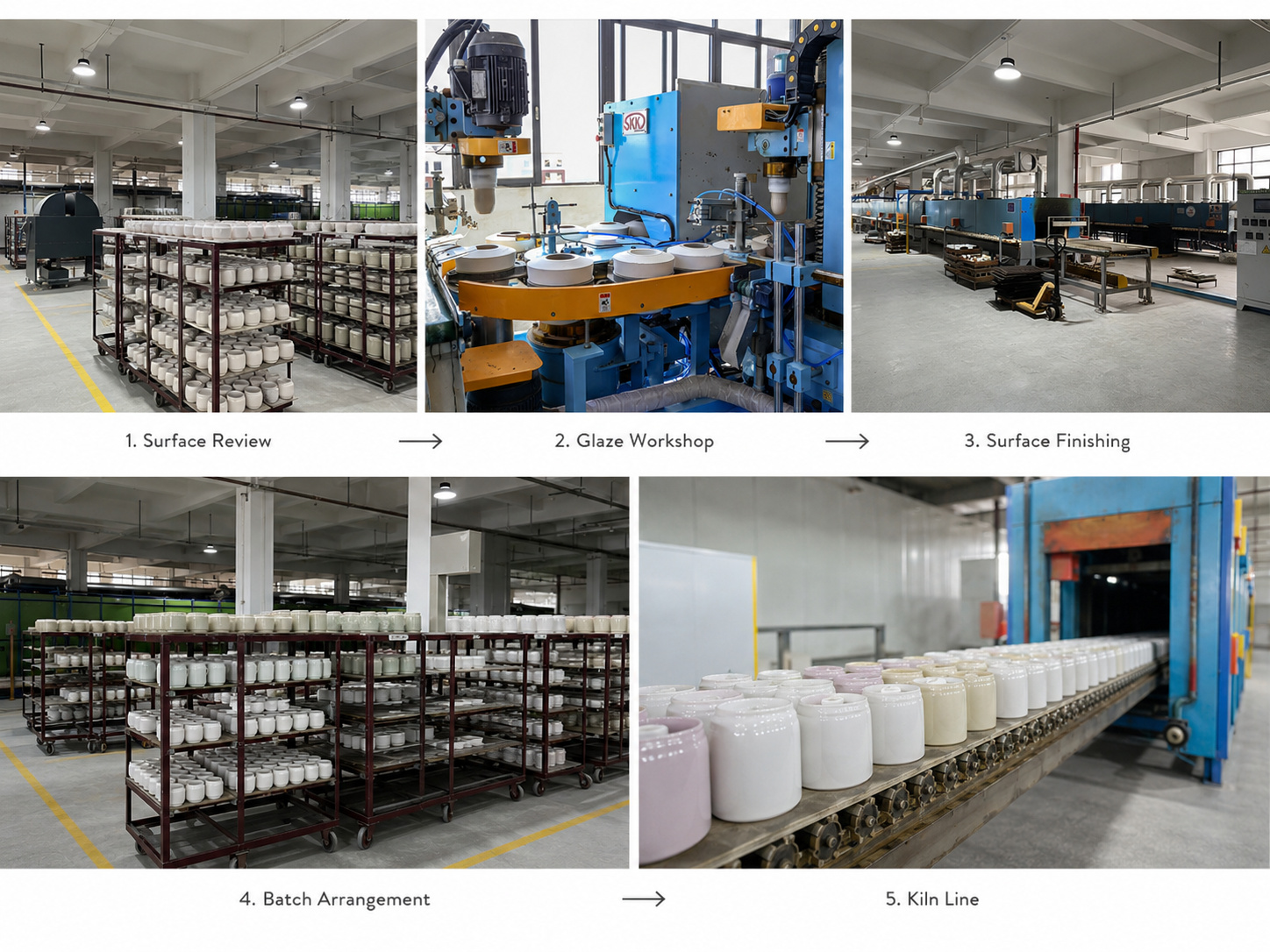 Surface Condition Before Glaze Application
A good finish begins with a suitable ceramic body. Before glazing, dried vessels should be reviewed for visible cracks, deformation, rim irregularities or other defects that could remain visible after firing.
This stage prevents additional processing from being added to unsuitable pieces.
The surface also needs to be appropriate for the approved finish. A smooth cylindrical vessel and a more textured or curved design may not produce the same visual result even when a similar glaze direction is used.
The previous body preparation stage is covered in our Forming & Drying process.
Glaze and Finish Application
For OEM orders, the glaze direction should already be defined during sample development.
Depending on the approved specification, the project may involve:
- Ceramic glaze application
- Spray finishing where applicable
- Matte or glossy appearance
- Selected surface effects
- Polishing or additional supported finishing
- Preparation for later logo or decoration processes
Not every finish is suitable for every vessel design. Surface texture, vessel curvature and the intended branding method need to be considered before bulk production begins.
The objective is to reproduce the approved sample direction consistently across the production batch rather than making finish decisions during mass production.
Approved Sample as the Production Reference
Ceramic color and surface appearance should be controlled against a physical approved sample.
Buyers normally review glaze color, gloss level, texture, visible surface effect and overall appearance before approving bulk production. If a lid or logo is part of the project, these elements should also be checked with the final vessel finish.
Ceramic processing can create reasonable visual variation between individual pieces. For this reason, bulk inspection focuses on whether the production falls within the agreed appearance range rather than promising perfect visual identity across every vessel.
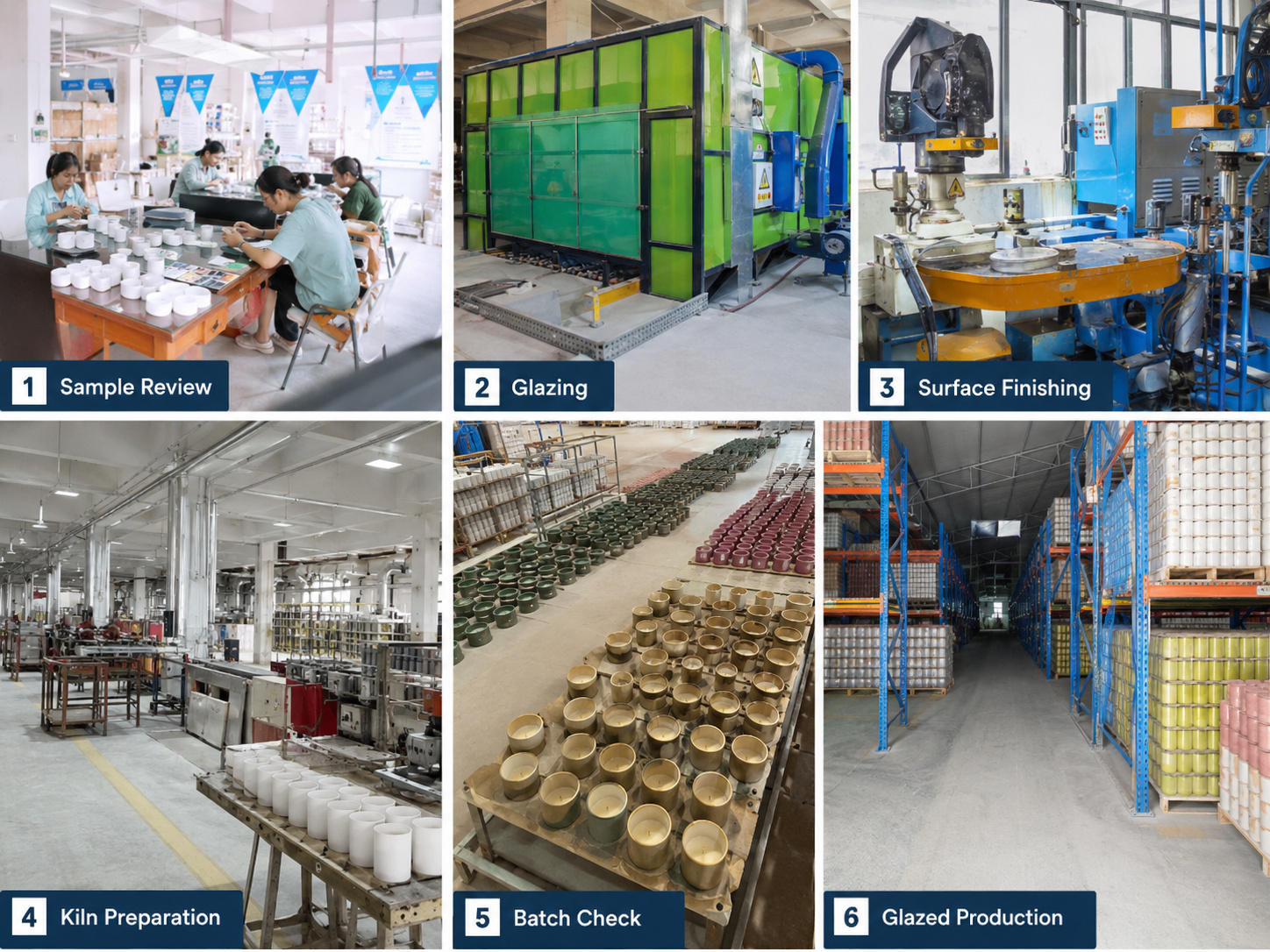 From Finished Surface to Kiln Firing
After glaze and surface preparation are completed, the vessels move into firing according to the confirmed ceramic production route.
Firing is the stage where the glaze and ceramic body develop their final fired appearance, so surface preparation and kiln processing need to be considered as connected production stages rather than separate tasks.
The next stage is explained in our Kiln Firing & Decoration page.
Standard and customized samples normally require about 7–15 days, while new mold projects generally require around 20–30 days before approval. After the complete sample is confirmed, bulk production normally takes approximately 30–45 days, depending on quantity, glaze, finish, decoration and packaging requirements.