
Firing Determines the Final Ceramic and Glaze Result
Kiln firing is one of the most important stages in ceramic candle vessel manufacturing because the ceramic body and applied glaze develop their final fired condition during this process.
At Vessaro’s Chaozhou production base, prepared ceramic vessels move from glazing and surface finishing into the firing stage according to the confirmed production route. Vessel shape, ceramic body, glaze system and surface requirements all need to be considered before a batch enters the kiln.
The appearance approved before firing is therefore not judged only from an unfired piece. The final production reference should be based on a fired physical sample that reflects the actual glaze color, gloss level and surface effect expected from bulk production.
The preceding stage is covered in our Glazing & Surface Finishing process.
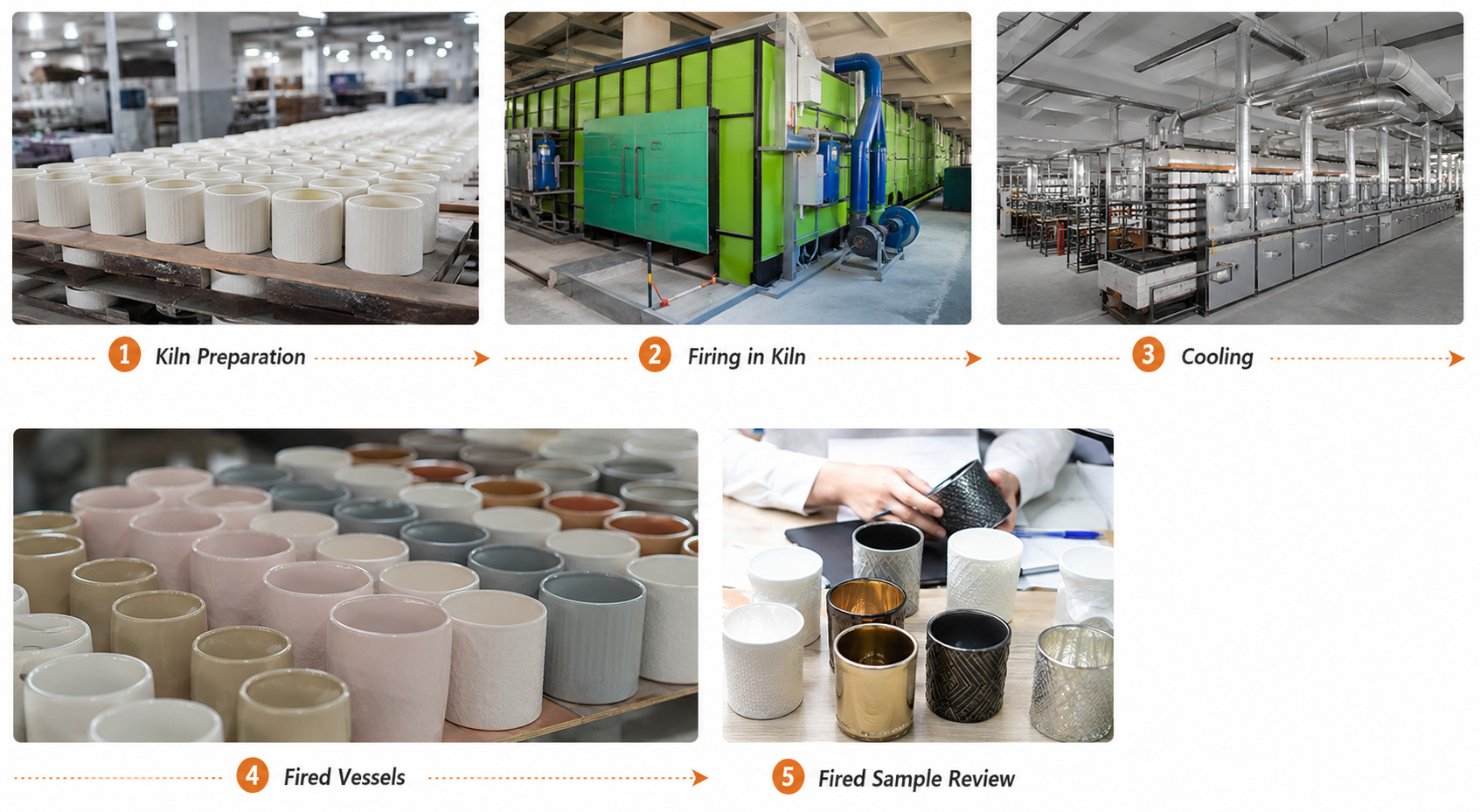 Kiln Preparation and Batch Arrangement
Before firing, glazed vessels should be arranged according to the production requirements of the selected ceramic design.
The vessel body and glazed surface need suitable handling because contact, positioning or contamination before firing can affect the finished appearance. Batch organization also helps keep the approved project specification separated from other production orders.
For OEM projects, the approved sample and production specification remain the reference throughout this stage.
Complex vessel shapes, heavier bodies or specific surface effects may require different production considerations from standard cylindrical candle jars, so firing requirements are reviewed according to the actual product rather than treated as identical for every design.
Fired Color and Surface Appearance
Ceramic glaze develops its final visual character during firing. Color depth, gloss, texture and surface effect can therefore look different after firing than they did during glaze application.
Reasonable variation can occur between ceramic pieces because fired ceramics are not produced in exactly the same way as injection-molded plastic or machined metal components.
Bulk production is checked against the approved fired sample and the agreed visual range. The objective is controlled batch consistency while recognizing the natural characteristics of ceramic processing.
Projects where glaze appearance is particularly important should first establish a clear reference through our Color, Glaze & Surface Finish development process.
Decoration After the Main Ceramic Finish
Depending on the approved project, supported decoration may be coordinated after the main ceramic surface has been produced.
Decoration requirements can include logo placement or other agreed branding effects suitable for the selected vessel and finish. The actual process depends on the ceramic surface, artwork and required appearance, so decoration feasibility is confirmed during sampling.
Logo size, position, visual contrast and alignment should be approved before bulk decoration begins.
For projects requiring detailed branding development, see our Logo & Branding page.
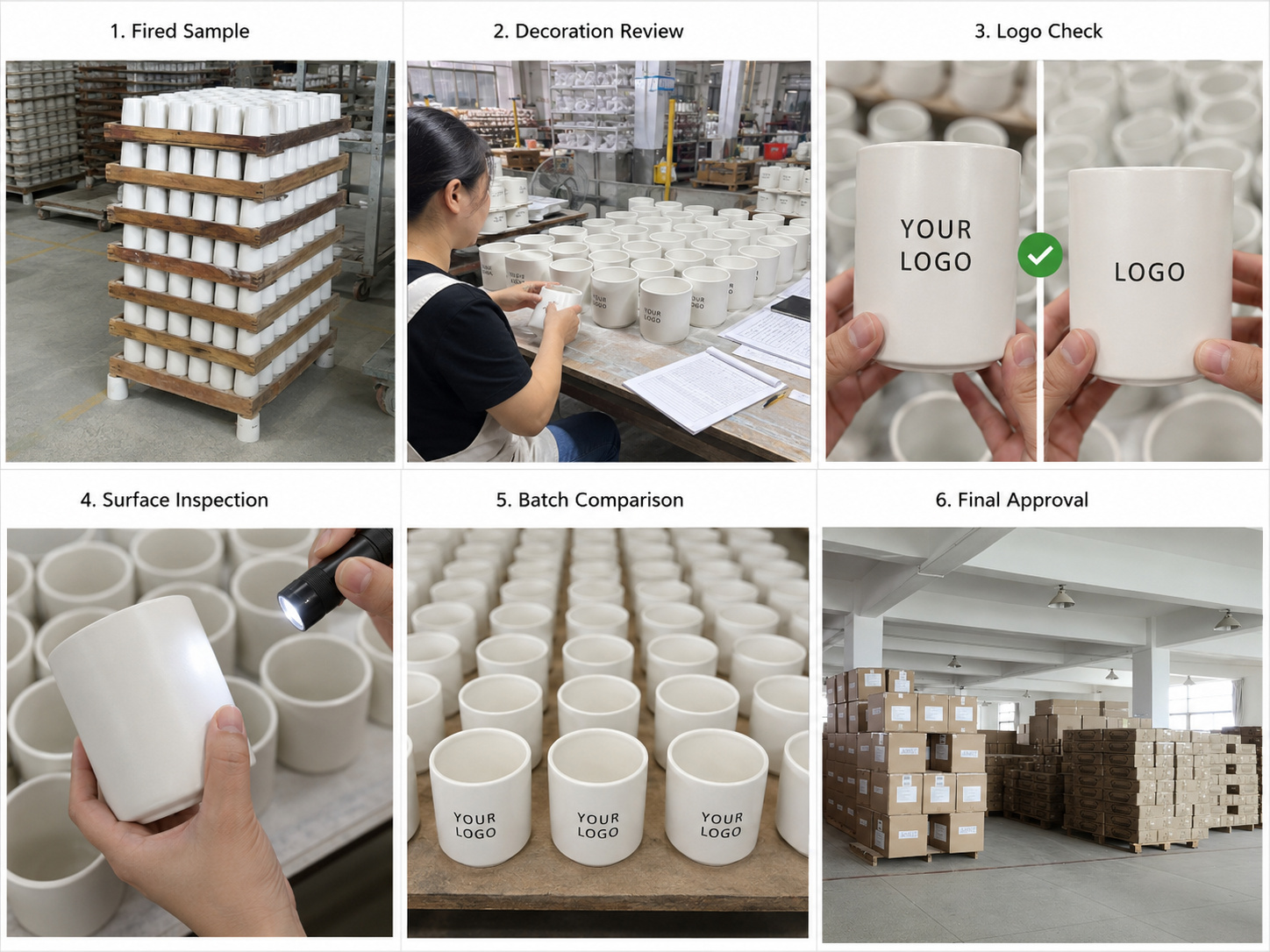 Inspection After Firing and Decoration
After firing and decoration, vessels can be reviewed for the details that will affect final order acceptance.
Checks may include overall appearance, glaze consistency, visible surface defects, logo position and agreement with the approved sample. Dimensional, lid-fit and final packing checks are handled later as part of the complete inspection route.
Standard and customized samples normally take around 7–15 days, while new mold projects generally require around 20–30 days before approval.
After the complete sample is approved, bulk production normally requires approximately 30–45 days, depending on order quantity, firing, decoration, finishing and packaging requirements.
The next control stage is covered on our Dimensional & Final Inspection page.